
In short
To import steel from China safely, check three things before you pay a deposit. First, the seller: its Chinese legal name, registration and bank account must match the contract, and a real producer accepts an audit. Second, the documents: a mill test certificate for each heat, checked against your specification and confirmed by third-party tests when the steel is critical. Third, the landed cost: in the EU, many steel products now face tariff quotas with a 50% out-of-quota duty, on top of any anti-dumping duty; in the US, Section 232 and anti-dumping duties change often. Price the steel duty-paid before comparing it with local supply.
The most expensive steel case our team has handled was not a quality problem. It was a supplier that did not exist as it claimed. This guide sums up what we check when industrial buyers import steel from China through our office in Guangzhou, where we have worked since 2008. It is written for companies buying steel or steel parts in volume, for production or projects.
Who is really selling you the steel?
Steel offers on Alibaba, Made-in-China or at trade fairs come from very different companies. The price is not what separates them. What matters is who produces the steel, who signs the contract and who receives your money.
| Seller | What it is | What to check |
|---|---|---|
| Steel mill or group subsidiary | Melts and rolls the steel itself | Large groups sell through identifiable subsidiaries and authorised distributors: verify the link independently |
| Processor or parts maker | Buys steel and cuts, forms, machines or coats it | Which mill the steel comes from, and whether the mill certificates follow the material |
| Trading company or stockist | Resells steel from one or several mills | Whether it names the mill, and whether certificates match the goods actually shipped |
| Unverifiable seller | Uses a big group’s name, an offshore entity or only a mobile number | Stop before paying anything |
A real case: a $600,000 steel order with a fake mill
A French maker of bolts and fasteners for bridges, railways and wind turbines had ordered $600,000 of steel and stainless steel. It had already paid a $60,000 deposit. The seller claimed to be part of the largest metal group in China. The client only asked us for a routine pre-shipment inspection.
When our team read the contract and the proforma invoice, the details did not add up. Our investigation found:
- An offshore company. A bank account existed in China under the English name on the contract, but the company was registered in the Marshall Islands. In a dispute, no Chinese court could help.
- No real Chinese identity. The Chinese name we finally obtained did not exist in the Chinese company registers, and the province differed between the Chinese and English names.
- A refusal to be audited. No audit of the production site, no name or address of the actual manufacturer, no office address.
- Weak signals that added up. A website less than a year old, only a mobile number, and a 10% deposit, when suppliers normally ask for at least 30%.
All of this was found before the balance was paid. We then took over the order: clear terms on payment and Incoterm, tests and sampling with Bureau Veritas, checks of the certificates against the client’s specification, loading supervision and the sealed container. Read the full case.
Checks to make before you pay a steel supplier
- Get the Chinese legal name and business licence. Every company in mainland China has a Chinese name and an 18-character Unified Social Credit Code. Check both in the official national enterprise credit register and compare them with the contract.
- Match the bank account to the company. The beneficiary must be the legal entity on the contract, ideally in mainland China. An offshore entity is a serious warning sign.
- Verify any link to a big group. Ask for proof, then check it yourself with the group, not with the seller.
- Visit or audit the site. A real producer accepts a factory audit. Refusing to name the factory ends the discussion.
- Use normal payment terms. Usually 30 to 50% at order and the balance before loading, tied to a passed inspection. A very low deposit on a large order can be bait.
- Agree on documents and tests in the contract. Which certificates, which tests, which lab, and what happens if results fail.
Scams remain rare in China. Most problems we see are about specifications and quality. But for steel, one unchecked supplier can cost a full deposit.
Mill test certificates: what to check
For steel and stainless steel, the mill test certificate is the document that says what you bought: grade, chemical composition and mechanical properties, linked to a heat number. Ask for certificates such as EN 10204 type 3.1, and check them before shipment, not on arrival.
- The grade, standard and values match your specification, not just “a similar grade”.
- The heat numbers on the certificate match the markings on the goods being loaded.
- The issuer is the mill that produced the steel, and its name matches what the seller told you.
- For critical uses, samples are taken in China and tested by a third-party lab. We work with SGS, Intertek and Bureau Veritas.
Certificates now matter for customs too. In the EU, from 1 October 2026, importers of the steel categories under the new tariff quotas must prove the country of “melt and pour” with verifiable evidence, such as a mill test certificate. US steel import licences also ask for the country of melt and pour.
Duties, quotas and anti-dumping in the EU and the US
Steel imports are closely regulated, and the rules changed a lot in 2025 and 2026. This is the situation as of 12 October 2026. Always confirm with the exact customs code and your customs broker before you sign.
| Market | Measure | What it means for you | Where to check |
|---|---|---|---|
| EU | Customs duty, anti-dumping and anti-subsidy duties | Many Chinese steel products carry extra duties. They depend on the exact product code and sometimes on the producer | TARIC, chapters 72 and 73 |
| EU | Regulation (EU) 2026/1384 on steel overcapacity, applying since 1 July 2026 and replacing the steel safeguard | Tariff quotas for listed steel categories; outside the quota, a 50% duty on top of other duties. Melt-and-pour evidence from 1 October 2026 | EUR-Lex, Annex I for the categories |
| EU | CBAM (carbon border adjustment) | In its definitive regime since 1 January 2026, covering iron and steel. Importers above the annual threshold need an authorisation | European Commission CBAM pages |
| US | Section 232 duties, anti-dumping and countervailing duties, steel import licence | Section 232 covers steel and many steel derivatives, and its rates and scope changed several times in 2025-2026. Many Chinese steel products are also under AD/CVD orders | CBP and your customs broker |
Our advice: compare landed costs, not factory prices. Add freight, the customs duty, any anti-dumping duty, the quota situation for your category and the CBAM cost. A Chinese price that looks cheaper at the factory can end up more expensive than local steel. Our import guide explains how to build that landed cost.
Documents and product rules
- For customs: commercial invoice, packing list, bill of lading or air waybill, and a certificate of origin when needed. Your broker files the entry.
- For the material: mill test certificates for each heat, and third-party test reports when agreed.
- EU construction products: steel products such as structural components can fall under the Construction Products Regulation, with CE marking and a declaration of performance. See our EU product compliance guide.
- US: country-of-origin marking, and a steel import licence for covered steel mill products before the entry summary is filed.
How Asiaction secures a steel order
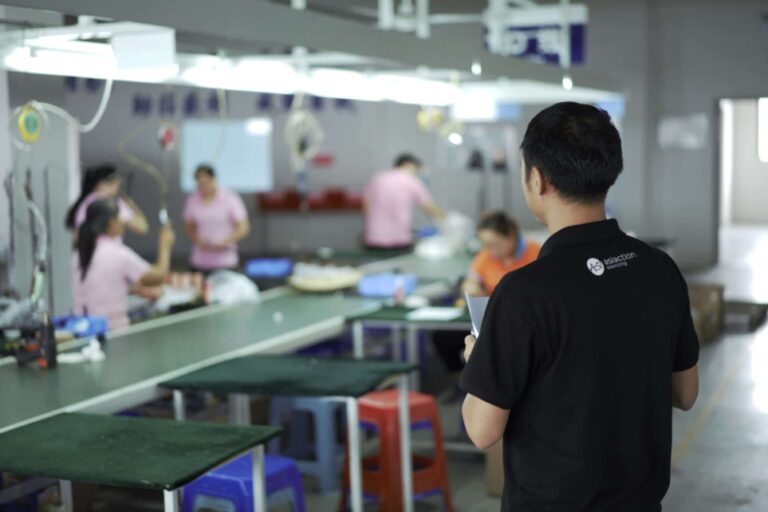
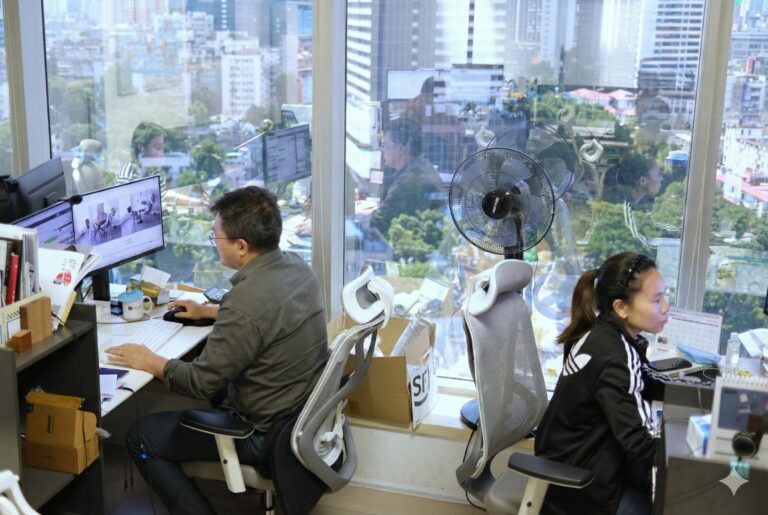
Our French-managed team in Guangzhou works as your purchasing office in China. For steel, the work covers four steps.
- Supplier search or investigation. A sourcing study contacts many suppliers and shortlists three to five, more when possible. Many do not pass our checks. If you already have a supplier, we start with an investigation of that company.
- Contract terms. Payment milestones, Incoterm, who pays duties and taxes, certificates and tests, inspection rights.
- Inspection and tests. We inspect every production we follow. Our default plan is ISO 2859-1 Level II, with 0 critical, AQL 2.5 major and AQL 4.0 minor, plus dimensions, markings, certificate checks and lab tests with SGS, Intertek or Bureau Veritas when needed.
- Loading and shipping. Loading supervision, sealed container and a check of the import documents prepared by the forwarder.
Payments to the factory can go through Asiaction. Our fee is paid by you, never by the supplier: we take no supplier commission, so our checks have no reason to go easy. Since 2008, we have followed more than 3,200 projects with a network of more than 6,500 partner factories. We work with companies placing large, recurring or project orders, not small one-off purchases. See also our guides on sourcing, order management and quality control.
FAQ: importing steel from China
Is it still worth importing steel from China?
It depends on the product code and your market. In the EU, tariff quotas, anti-dumping duties and CBAM can remove the price gap; in the US, Section 232 and AD/CVD duties often do. Compare the duty-paid landed cost with local supply before deciding.
What is a mill test certificate and why does it matter?
It is the mill’s document stating the grade, chemical composition and mechanical properties of a heat of steel. It proves what you bought, and in the EU it can now serve as evidence of the country of melt and pour. Check it against your specification and the markings on the goods, and confirm it with third-party tests for critical uses.
How can I tell if a supplier really belongs to a big steel group?
Get its Chinese legal name and check it in the official register, then verify the link with the group itself. Large groups sell through identifiable subsidiaries and authorised distributors. An offshore entity, a mismatch between the Chinese and English names or a refused audit are strong warning signs.
What deposit is normal with a Chinese steel supplier?
Usually 30 to 50% at order and the balance before loading, after a passed inspection. A request for full prepayment is a warning, and so is a deposit far below the norm on a large order.
Can Asiaction help if I have already paid a deposit?
Yes. As in the fastener case, we investigate the supplier, reset clear terms, organise third-party tests and manage the rest of the order to limit your risk.
Does Asiaction take commissions from steel suppliers?
No. Our fee is paid by the client, never by the supplier. You receive the supplier’s full details and can visit the factory.
Buying steel in China for production or a project?
Send us your specification, volumes and the supplier you are considering. Our team in Guangzhou will tell you what we would check before you pay.