
Case at a glance
- Client: Company buying joinery products from China, with no intermediary on site
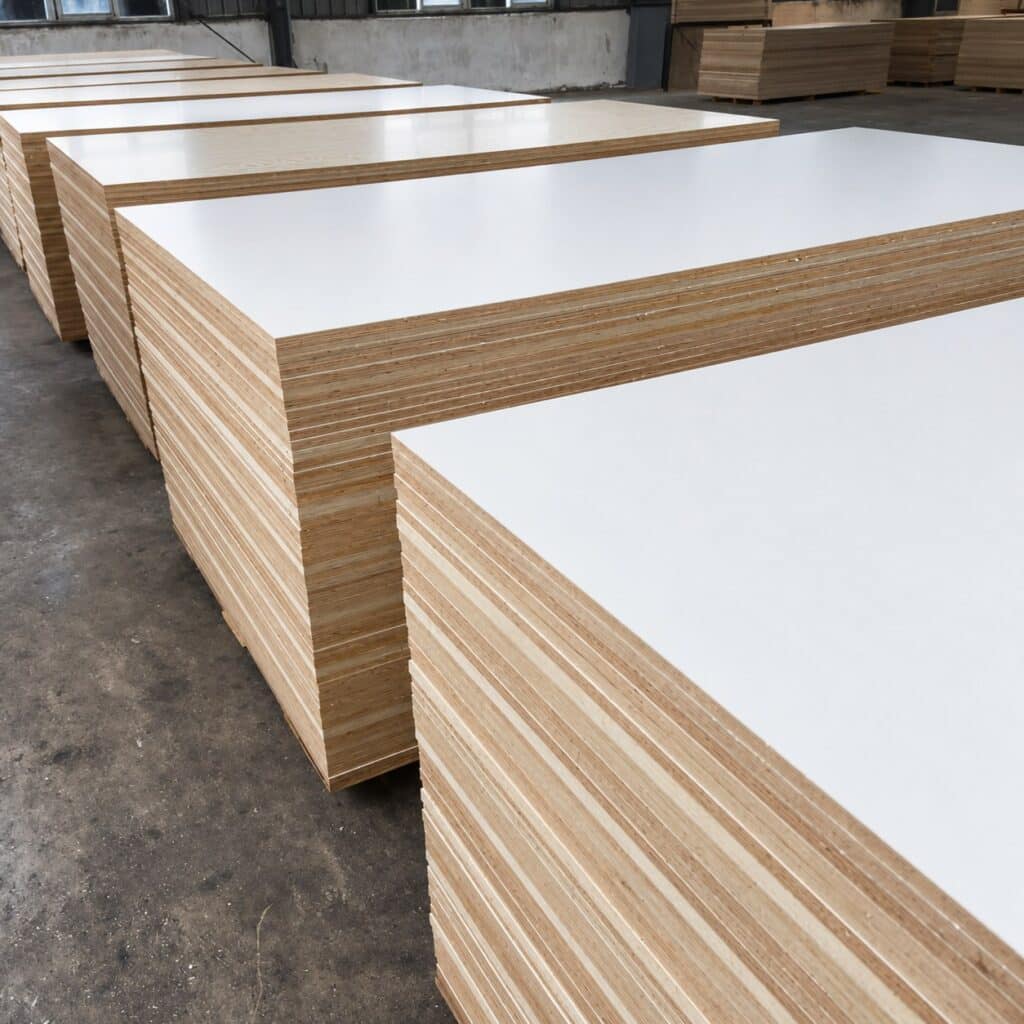
- Product: Melamine plywood panels
- Stakes: An order paid but still not delivered one year later, for a loss of $7,266
- Asiaction services: supplier verification, mediation with the supplier, order follow-up
- Outcome: Fraud uncovered, reasons for the non-delivery clarified, supplier pushed to commit to a refund
A company had ordered melamine plywood panels from a Chinese supplier and paid for them. One year later, nothing had been delivered and the supplier gave no clear answers. With no one on site in China, the buyer asked Asiaction to step in. Here is how our team found out what was really going on, what the warning signs were, and what any importer of wood panels can check before paying a supplier in China.
The client: an importer of melamine plywood panels for joinery
The client is a company that buys joinery products in China, in this case melamine plywood panels. Like many importers, it had placed the order directly with a Chinese supplier, without an agent or purchasing office on the ground.
Buying directly is common and often works well. But when something goes wrong, distance, language and the lack of local contacts make it very hard to understand what is happening, let alone fix it.
The challenge: a melamine plywood order stuck in China for a year
The company contacted Asiaction about an order of melamine plywood panels placed a year earlier that had still not been delivered. The supplier had committed to producing the panels and delivering them to the final destination, but had not kept its commitments. The order was left in limbo.
The supplier’s communication was neither clear nor transparent, which made the order uncertain and risky to manage. The buyer faced two critical questions:
- Was it still possible to recover the order?
- If not, could the payment already made be recovered?
Without an on-site intermediary to unblock the situation and get reliable information, the company asked Asiaction for mediation, a clear picture of the situation and help to protect its interests.
The investigation: what was really happening at the supplier?
Once the case was in our hands, our team took a methodical and proactive approach.
First contact: a supplier that “did not understand”
Asiaction first contacted the supplier directly. The supplier claimed not to understand the client’s request and said it lacked the resources to fulfil it. For an order that had been agreed and paid a year earlier, this answer raised more questions than it solved.
Checking official Chinese government databases
We then ran a thorough check of the supplier’s reputation in official Chinese government databases. The result was clear: the company was listed as defective. This is exactly the kind of information a foreign buyer cannot easily find or read from abroad, and it changed the whole picture.
The supplier admits serious financial problems
With this evidence in hand, Asiaction went back to the supplier and asked for an explanation. The supplier then admitted to serious financial problems and promised a refund.

The warning signs in this case
Looking back, several signals showed that the order was in trouble long before the truth came out:
- An order still not delivered after a year, despite the supplier’s commitment to produce and deliver.
- Unclear, non-transparent communication with the buyer.
- A supplier claiming not to understand a request for an order it had already accepted.
- “Lack of resources” given as a reason not to deliver.
- A company listed as defective in official Chinese government records.
Checking a supplier’s status in official Chinese records before paying, and again while the order is in progress, is one of the simplest ways to spot a company in difficulty.
The solutions implemented by Asiaction
1. Weighing the options realistically
A promise of refund from a company in financial trouble is fragile. Given the supplier’s situation, the refund could take a long time, or never happen. We reviewed the options with the client:
- Legal action: too costly compared with the amount at stake, with no immediate result, and the supplier could go bankrupt before paying anything.
- Waiting passively: the most likely way to never see the money again.
- Constant, local pressure: keeping the supplier under regular follow-up so that it honours its commitments and pays the refund as soon as possible.
2. Applying constant pressure on the supplier
The most realistic solution was the third one. As a team based in China, speaking the supplier’s language and knowing how local companies work, Asiaction kept up steady pressure on the supplier to fulfil its commitments and issue the promised refund.
Just as important, the client finally knew the truth: why the panels had never been delivered, and what it could and could not expect from this supplier.
The results
- Fraud uncovered: after a year of vague answers, the real situation of the supplier was brought to light.
- Reasons for the non-delivery clarified: a supplier listed as defective and facing serious financial problems.
- Supplier commitment to a refund obtained, with ongoing pressure to make it happen.
- Costly legal action avoided and similar risks prevented for the client’s future purchases.
The client’s loss on this unfulfilled order amounted to $7,266. A relatively modest sum, but one that a simple check of the supplier before ordering could have protected.
How to avoid a supplier scam when importing melamine plywood from China
Most orders of wood panels from China go well. But building and joinery materials are often bought from traders or small factories, sometimes on a single order, which is when problems arise. A few checks before and during the order make a big difference:
- Verify the company in official registers. Get the supplier’s Chinese legal name and business license, and check its status in the national enterprise credit system: registration, business scope, legal representative and any abnormal-operation or dishonest-debtor listings.
- Find out if you are dealing with a factory or a trader. Many panel sellers are trading companies. That is not a problem in itself, but you need to know who actually produces the panels and whether that factory is stable.
- Have the supplier audited before a first order. A supplier audit confirms the address, production lines, capacity and financial health of the company before any money is sent.
- Link payments to milestones. Pay the balance only after a pre-shipment inspection, and make sure the bank account belongs to the same legal entity as the contract.
- Do not let a delay drag on. When a delivery date passes without a clear explanation, act quickly. The longer you wait, the harder it is to recover an order or a payment from a company in difficulty.

How to check melamine plywood panel quality before shipment
Beyond the supplier itself, the panels must match your specifications. During a pre-shipment inspection of melamine plywood, the key points to check are:
- Dimensions and thickness: length, width, thickness tolerance and squareness, measured on a sample of panels from different pallets.
- Core and glue quality: the wood species of the core, number of plies, gaps, overlaps and delamination, visible on the edges and on cut samples.
- Melamine surface: colour and decor matching the approved sample, no scratches, bubbles, stains or uncovered areas.
- Formaldehyde emissions: the emission class required in your market (for example E1 in Europe, or CARB / TSCA Title VI in the United States), backed by a recent test report from a recognised laboratory.
- Moisture content and packing: panels properly dried, protected on pallets, and ready for a long sea journey without warping or damage.
Ask for certificates early, check that they match the actual producer, and have them verified rather than simply trusting a PDF sent by email.

Conclusion
This case shows how important it is to secure each step of an import process, especially with a supplier you do not know well. Buying from China remains a real opportunity, but an unreliable supplier can leave an order unpaid, undelivered and unexplained for months. Here, Asiaction’s intervention uncovered the fraud, clarified why the melamine plywood panels were never delivered, and helped the client avoid the same risk in the future.
Even experienced importers benefit from a trusted partner on the ground. An outsourced purchasing office in China such as Asiaction secures your purchases from supplier sourcing to order follow-up and shipping.
Is your order from China delayed or blocked?
Our team in China can check your supplier’s official status, contact them directly and help you find the most realistic way to recover your order or your payment.
FAQ
What can I do if my Chinese supplier has not delivered my order?
Act quickly. Check the supplier’s status in official Chinese records, contact it through someone who speaks Chinese and can visit if needed, and assess realistic options. As in this case, steady local pressure is often more effective than costly legal action.
How can I check if a Chinese supplier is in financial difficulty?
Official Chinese government databases show a company’s registration status and whether it has been listed for abnormal operations or legal issues. A supplier audit adds an on-site view of its activity and capacity.
Is it worth suing a Chinese supplier for an unpaid refund?
It depends on the amount and the supplier’s situation. For a modest sum, or a company close to bankruptcy, legal costs and delays can exceed what you may recover. Prevention through supplier verification before paying is far more effective.