Case at a glance
- Client: Company expanding its range with a new collection of electric bikes
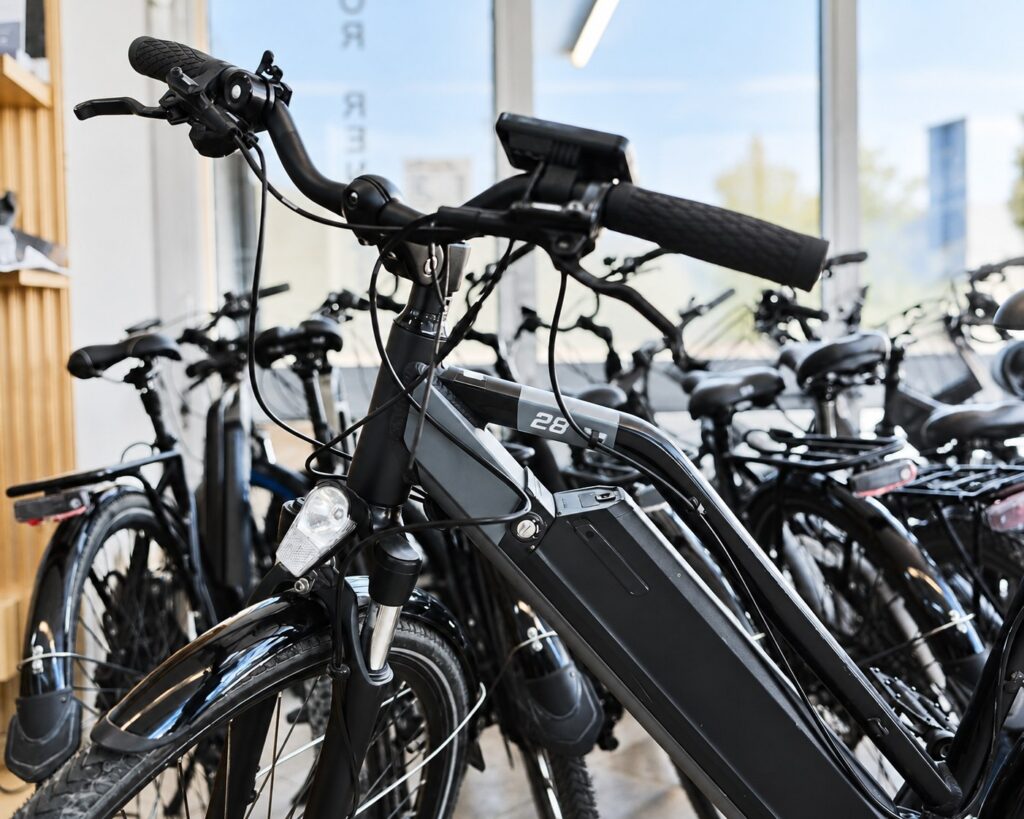
- Product: Electric bikes imported from China, shipped by container
- Stakes: €142,144 order stranded in a transit port, storage fees of €100 per day
- Asiaction services: mediation with supplier and forwarder, shipping management, import documents, order follow-up
- Outcome: Transport reorganised with a new forwarder, container delivered, losses limited
A company launching a new range of electric bikes had agreed with its Chinese supplier on delivery to its own warehouse. Instead, the container ended up stuck in a transit country, piling up storage fees while nobody could explain what was going on. Here is how Asiaction unblocked the shipment, what the incident really cost, and what to check before you import electric bikes from China.
The client: a company diversifying into electric bikes
The client wanted to expand its product range by importing a new collection of electric bikes from China. This diversification was a key project for the company, with a distribution schedule and commercial commitments built around the arrival of the goods.
Importing from China offers real opportunities, but it is never simple: communication with suppliers, cultural differences, unclear quality standards, delays and logistical blockages. On this project, the problem did not come from the factory floor. It came from transport.
The challenge: an e-bike container stranded in a transit port
The supplier had agreed to deliver the electric bikes all the way to the customer’s warehouse. It did not keep that commitment. The container was left stranded in a transit country, an unplanned stop, and the goods were immobilised at the port.
The situation quickly became critical for the importer:
- A broken delivery commitment: the supplier did not deliver to the warehouse as agreed.
- Goods blocked at the port, exposed to daily storage fees and to the risk of deterioration if the blockage lasted.
- No clear communication from either the supplier or the initial freight forwarder.
- No representative on the ground to find out what was wrong and push for a solution.
- A distribution schedule in danger, along with the company’s commercial commitments.
With no one able to act locally, the company turned to Asiaction to handle this logistical emergency.
What Asiaction did to unblock the shipment
1. Mediation between client, supplier and forwarder
Asiaction first acted as a mediator between the client, the supplier and the initial freight forwarder. The goal was to identify the real source of the blockage and find a quick way out. The analysis made one thing clear: the logistics partners chosen by the supplier were not reliable.
2. Complete reorganisation of the transport
Rather than waiting for the original chain to fix itself, Asiaction took the initiative to rebuild the transport from scratch:
- selection of a new freight forwarder to complete the delivery;
- identification of all the import conditions that applied to the shipment;
- retrieval of the documents needed to release and import the goods;
- follow-up of the transport until final delivery to the client.
Thanks to this complete and rapid intervention, the client received its electric bikes, and material and financial losses were kept to a minimum.
The real cost of the logistics failure
Even with a fast rescue, the incident had a price. Here is how the additional charges broke down:
- €4,200 in storage costs while the goods were immobilised, at €100 per day;
- €16,000 for the new freight forwarder needed to complete the delivery;
- €7,448 in customs duties;
- €30,043 in anti-dumping duties.
The customs and anti-dumping duties are costs the company would not have had to bear if the delivery had been made in DDP (Delivered Duty Paid), as the supplier’s commitment to deliver to the warehouse implied. In total, €57,691 was added to the original order, raising the total from €142,144 to €199,835, an increase of about 40%.
Time was the other cost. Delivery went from 7 to 13 weeks, which delayed the commercial launch of the new range and strained the company’s relationship with its partners.
Most of these costs could have been avoided by securing the transport chain before the container left China: reliable forwarders, verified documents and continuous tracking.
The results
- Source of the blockage identified through mediation between the client, the supplier and the initial forwarder.
- Transport fully reorganised with a new, reliable freight forwarder.
- Import conditions and documents secured so the goods could be released.
- Electric bikes delivered to the client, with material and financial losses minimised.
How to import electric bikes from China without losing control of shipping
Electric bikes combine several risks in one product: regulated safety standards, lithium batteries classed as dangerous goods for transport, and trade defence duties in some markets. Before you place an order, check these points:
- Put the Incoterm in writing, and check what it really covers. If the supplier promises delivery to your warehouse, the contract and the proforma should state the Incoterm clearly (DDP, DAP, CIF…) and who pays freight, customs duties, anti-dumping duties and VAT. A verbal “door to door” promise is not enough.
- Check the duties before you sign. The EU applies anti-dumping and anti-subsidy (countervailing) duties to electric bicycles from China, on top of normal customs duties. Rates depend on the manufacturer, so look up the exact situation in the EU TARIC database, or ask a customs broker, before you calculate your landed cost.
- Verify conformity for your market. In Europe, pedal-assisted e-bikes (EPACs) are built to the EN 15194 standard, which covers bikes with assistance limited to 25 km/h and a maximum continuous rated power of 250 W. They must carry the CE marking with a declaration of conformity. Ask for the test reports and check that they match the exact model you order.
- Prepare the battery transport documents. Lithium-ion batteries must pass the UN38.3 tests, and the supplier should provide the UN38.3 test summary. E-bikes are shipped as dangerous goods (class 9), which means correct declarations, labelling and a forwarder that accepts this type of cargo.
- Choose and check your freight forwarder. When the supplier picks the forwarder, you have little visibility. Make sure it is an identifiable, reliable company, or use your own shipping partner, and know who to call if the container is delayed or rerouted.
- Inspect before shipment and track the container. A pre-shipment inspection checks the bikes, batteries, labels and packaging before loading. After that, continuous tracking lets you react as soon as something goes wrong instead of discovering it weeks later.
It also pays to start earlier in the chain: a supplier verification shows whether a factory has real export experience to your market, and whether it can honestly deliver on the terms it promises.
Conclusion
This case shows that an import can go wrong long after production is finished. A supplier that does not keep its delivery promise, unreliable logistics partners and no one on the ground were enough to add €57,691 to an order and nearly double the lead time. Through mediation and a complete reorganisation of the transport, Asiaction got the electric bikes delivered and limited the damage.
Delays, blockages and extra costs usually come from a lack of local oversight. An outsourced purchasing office in China such as Asiaction supports you at every step, from supplier sourcing and order management to delivery at your door.
Planning to import electric bikes from China?
Our team in China can check your supplier, inspect your bikes before loading and manage the shipment until delivery, so your container does not get stuck on the way.
FAQ
What does DDP mean when importing from China?
Under DDP (Delivered Duty Paid), the seller delivers the goods to the agreed destination and bears the transport costs, import duties and taxes. In this case, the extra customs and anti-dumping duties, €37,491 in total, are costs the client would not have had to pay if the delivery had been made in DDP.
Are there anti-dumping duties on electric bikes from China?
Yes, the EU applies anti-dumping and anti-subsidy duties on electric bicycles from China, and the rate depends on the manufacturer. In this case, anti-dumping duties alone came to €30,043. Always check them before you calculate your landed cost.
Can Asiaction help if my container is already blocked?
Yes. As in this case, we can mediate between you, the supplier and the forwarder, find the cause of the blockage, appoint a reliable forwarder, gather the import documents and follow the shipment until delivery.